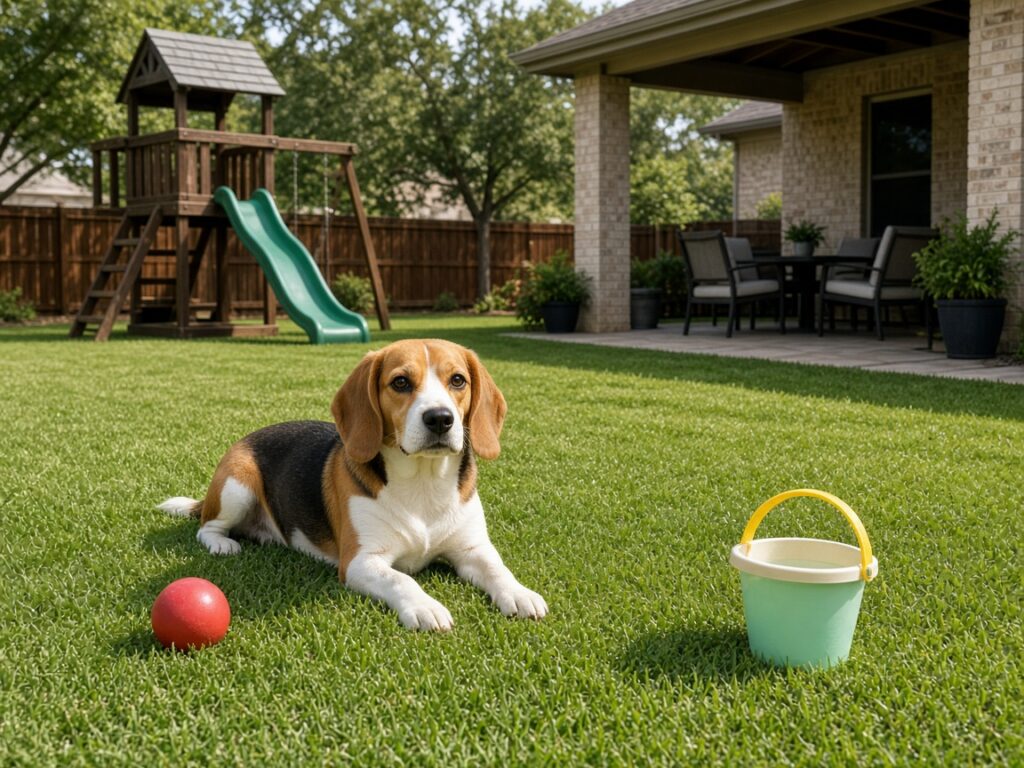
“It’s natural, it’ll break down” is one of the most common reasons dog waste gets left in the yard. It does break down eventually, but not quickly, and not cleanly. What’s left behind can include parasite eggs, bacteria, and nutrients that end up in soil, on shoes and paws, and in storm drains. None of this means your yard is dangerous. It means picking up is a simple habit that meaningfully lowers risks you otherwise can’t see. Here’s what the CDC, EPA, and local water-quality experts say.
Potential Risks, Not Guaranteed Outcomes
A quick note on tone. Most people who step in dog poop don’t get sick, and most healthy dogs aren’t shedding anything dangerous on a given day. Health agencies recommend prompt pickup not because every pile is a hazard. It’s because you can’t tell which ones are, and picking up is easy. The CDC points out that even a dog that looks healthy can spread germs to people and other animals.
Parasites That Live in Soil
Roundworm (Toxocara)
Toxocariasis, often called “dog roundworm,” spreads through contact with the feces of infected dogs and cats. According to the CDC, roundworm eggs are carried in animal feces and can reach people’s mouths through contaminated dirt or unwashed hands. Many infected people have no symptoms. In some people, though, it can cause fever, coughing, or abdominal pain and may damage the eyes. The CDC notes that puppies are commonly infected from their mother before birth or while nursing.
Hookworm
Zoonotic hookworms are common in dogs and cats and live in soil contaminated with animal feces. Larvae can burrow into bare skin when someone walks barefoot or sits on contaminated soil or sand, causing itchy red tracks. Most people recover without treatment. The CDC’s prevention advice starts with “dispose of animal waste quickly” so the eggs don’t get into the soil and hatch.
Germs in Dog Waste
The Houston-Galveston Area Council (H-GAC) lists illnesses that can come from pet waste, including campylobacteriosis, a bacterial infection that causes diarrhea, and cryptosporidiosis, a parasitic infection that causes diarrhea and stomach distress. EPA materials also name bacteria such as E. coli and parasites such as Giardia among the pathogens pet waste can carry.
Context matters here too. The CDC says you’re unlikely to get Giardia from your dog, because the types that usually infect dogs are generally not the ones that make people sick. Giardia does, however, spread easily from one pet to another through contaminated soil and surfaces.
Children and Family Members
Kids play close to the ground, put their hands in their mouths, and don’t always wash up. That’s why the CDC specifically says dog poop should be picked up “even in your own yard, and especially in areas where children may play,” and advises teaching children that eating dirt is dangerous. Adults who garden are in close contact with soil too, and gloves plus handwashing go a long way. The CDC also advises that people with weakened immune systems be especially careful about contact with animal waste.
Other Pets
Your own dogs, visiting dogs, and cats that pass through all share the yard. Dogs can pick up parasites like Giardia by swallowing small amounts of contaminated poop, rolling in contaminated soil, or licking their paws and coats afterward. Regular cleanup, plus the veterinary care and parasite prevention your vet recommends, keeps that cycle from repeating. Questions about your pet’s health belong with your veterinarian.
Wildlife, Runoff, and Local Waterways
What happens in the yard doesn’t always stay there. The EPA calls pet waste “a leading source of nutrient and bacteria pollution in urban streams and waterways.” Stormwater picks up waste left on the ground and carries it, often through storm drains, into creeks, lakes, and rivers. There it can make people and animals sick and feed weed and algae growth. H-GAC explains that in the Houston area, those storm drains connect to creeks and bayous. As waste decomposes, it uses up oxygen fish need. More on this in the environmental impact of dog waste.
“But It Breaks Down on Its Own…”
Breaking down isn’t the same as going away. As a pile breaks down, the parasite eggs and germs in it don’t vanish. They end up in the surrounding soil and runoff. The CDC’s roundworm guidance is built around exactly that: eggs from feces end up in the soil, which is how people and pets encounter them later. Waiting for rain to “take care of it” just moves the problem downstream.
Responsible Disposal: What the Agencies Recommend
- Bag it and put it in the trash. The CDC recommends bagging or burying pet waste and disposing of it in the trash. In Houston, the city code asks that pet feces go into household containers wrapped separately and securely.
- Don’t put it in the compost. USDA guidance on composting dog waste stresses that it takes careful, dedicated methods, and even then the compost shouldn’t go on food crops. A regular backyard compost pile isn’t the place for it.
- Keep it out of gutters and storm drains. The EPA specifically warns against letting pet waste reach street gutters and storm drains.
- Wash your hands afterward, even if you used a bag or gloves.
Easy Habits That Lower the Risk
- Pick up promptly. Daily is ideal where kids play or a puppy is learning. See how often you should pick up dog poop.
- Pick up before rain when you can.
- Keep supplies by the back door so it’s quick.
- Wear shoes in the yard and gloves for gardening.
- Keep up with the veterinary care and parasite prevention your vet recommends.
The Bottom Line
Leaving dog poop in the yard won’t guarantee anyone gets sick, but it gives parasites, germs, and runoff a head start you don’t need to give them. Prompt pickup, proper disposal, and handwashing handle most of the risk.
Need Someone Else to Handle the Dirty Work?
Heather’s Poop Scoop Service provides professional pet-waste removal for homes in our service area. Recurring service has no contract and no extra fee for additional dogs.
Sources & Further Reading
- CDC — Healthy Pets, Healthy People: Dogs
- CDC — About Toxocariasis
- CDC — How Toxocariasis Spreads
- CDC — About Zoonotic Hookworm
- CDC — About Giardia and Pets
- CDC — What Causes Parasitic Diseases
- Houston-Galveston Area Council — Pet Waste Pollutes
- EPA — Stormwater Best Management Practice: Pet Waste Management (PDF)
- EPA — Source Water Protection Practices Bulletin: Managing Pet and Wildlife Waste
- USDA NRCS — Composting Dog Waste (PDF)