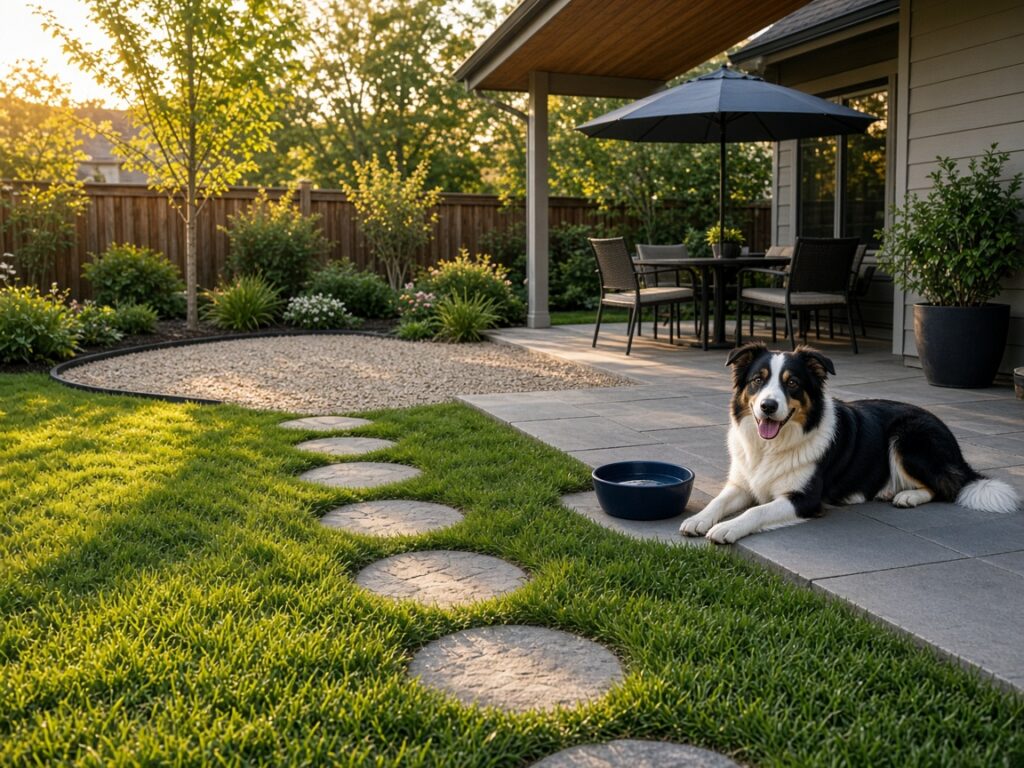
A pet-friendly yard isn’t just one your dog enjoys. It’s one the whole household wants to use: somewhere you can sit on the patio, let kids run around, and toss a ball without scanning the grass first. You don’t need a landscaping overhaul to get there. Most of it comes down to where waste ends up, how easy it is to clean up, and a few simple routines. Here’s how to set up a yard that stays cleaner with less effort.
Start with the Waste Plan
Every other idea in this article works better once pet waste is handled. The CDC recommends picking up dog poop and disposing of it properly, even in your own yard and especially where children play. If waste is regularly picked up, the rest of the yard is easier to enjoy and maintain. If you’re not sure how often that should be, see how often you should pick up dog poop.
Create a Designated Potty Area
A dedicated potty area is the single most useful layout change for a cleaner yard. Mississippi State University Extension suggests training dogs to use an area designed for them. Use a surface the dog finds acceptable, such as pea gravel or mulch, and consider a “marking post” like a large rock or a garden ornament. The benefits add up:
- waste concentrates in one place, so cleanup is faster and less gets missed;
- the rest of the lawn is spared the urine spots and worn patches dogs cause;
- kids’ play areas and the patio stay cleaner; and
- you can hose down or refresh the surface as needed.
Tips for a potty area that gets used
- Put it somewhere convenient for you and the dog. It should be close enough to reach in the rain, but away from the patio table and play set.
- Make it big enough for your dog, or dogs, to turn around and sniff comfortably.
- Train with a leash at first. Mississippi State Extension notes you may need to leash your dog for a while to build the habit.
- Keep it clean. A potty area covered in old waste defeats the purpose. Scoop it at least as often as you’d scoop the lawn.
Plan Around Your Dog’s Traffic Patterns
Dogs wear paths. Watch for a few days and you’ll see them: the fence line where they patrol, the route from the door to their favorite spot, the corner where they wait for you to come home. Instead of fighting those paths, work with them:
- Firm up worn paths with stepping stones, pavers, or mulch so they don’t turn into mud after rain.
- Keep the route to the potty area clear and easy to walk in any weather.
- Check traffic zones first when you scoop. Waste tends to collect along the same routes dogs travel.
- Protect the grass that matters most. If there’s a patch of lawn you really care about, guide traffic around it.
Choose and Care for Grass That Can Take It
No grass is dog-proof, but some recover better than others. University of California Cooperative Extension notes that spreading warm-season grasses, including bermuda and St. Augustine, which are common in Houston-area yards, recover from dog damage faster than bunch-type grasses. Extension sources also agree that well-watered, healthy turf holds up better than drought-stressed grass. For more on how dog waste affects lawns, see does dog poop hurt your grass?
Keep Outdoor Areas Enjoyable
Patios and seating areas
Odor is often what makes people stop using the patio. Keep the potty area and the trash cart away from where you sit, and keep the cart lid closed. Scoop regularly in warm weather, when odor builds fastest.
Play areas
Keep play sets, sandboxes, and kids’ areas away from the dog’s potty area and high-traffic paths. Cover sandboxes when they’re not in use. The CDC notes that some parasites from dog and cat feces live in soil or sand.
Gardens
Fence off vegetable gardens if your dog likes to dig or wander there. USDA guidance on dog-waste compost says it should not be used on crops grown for people to eat, so keep dog waste out of edible beds entirely.
Simple Maintenance Routines
- Daily: a quick check of the potty area and main traffic zones.
- A few times a week or weekly: a full walk of the yard to pick up anything missed, including along fence lines and under shrubs.
- Before mowing: always scoop first so you don’t spread waste across the lawn.
- Before rain: pick up when you can. The EPA notes that stormwater carries pet waste left on the ground toward storm drains and local waterways.
- Monthly: rinse the trash cart, refresh mulch or gravel in the potty area, and check fences and gates.
Considerations for Families and Pets
- Shoes on in the yard. The CDC advises wearing shoes where soil may be contaminated with animal feces, because hookworm larvae can enter bare skin.
- Handwashing after yard play, especially for kids, and after handling pet waste.
- Veterinary care. Regular vet visits and the parasite prevention your veterinarian recommends protect both pets and people.
- Supervision. The CDC recommends always supervising young children around dogs, even trusted family pets.
The Bottom Line
The most pet-friendly yard is a clean one. Give waste a designated place, work with your dog’s natural paths, keep grass healthy, and build a few simple routines. You’ll spend less time cleaning and more time enjoying the yard with your dogs.
Want a Cleaner Yard Without the Scooping?
Regular professional cleanup is the easiest way to keep a pet-friendly yard pet-friendly. Heather’s Poop Scoop Service offers recurring and one-time visits across our Northwest Houston service area, with a free yard deodorizer every time.
Sources & Further Reading
- Mississippi State University Extension — “Dog-On-It” Lawn Problems
- University of California Cooperative Extension — Lawns ’n’ Dogs (PDF)
- NC State Extension — Dogs and Turfgrass Interactions
- CDC — Healthy Pets, Healthy People: Dogs
- CDC — About Zoonotic Hookworm
- USDA NRCS — Composting Dog Waste (PDF)
- EPA — Stormwater Best Management Practice: Pet Waste Management (PDF)