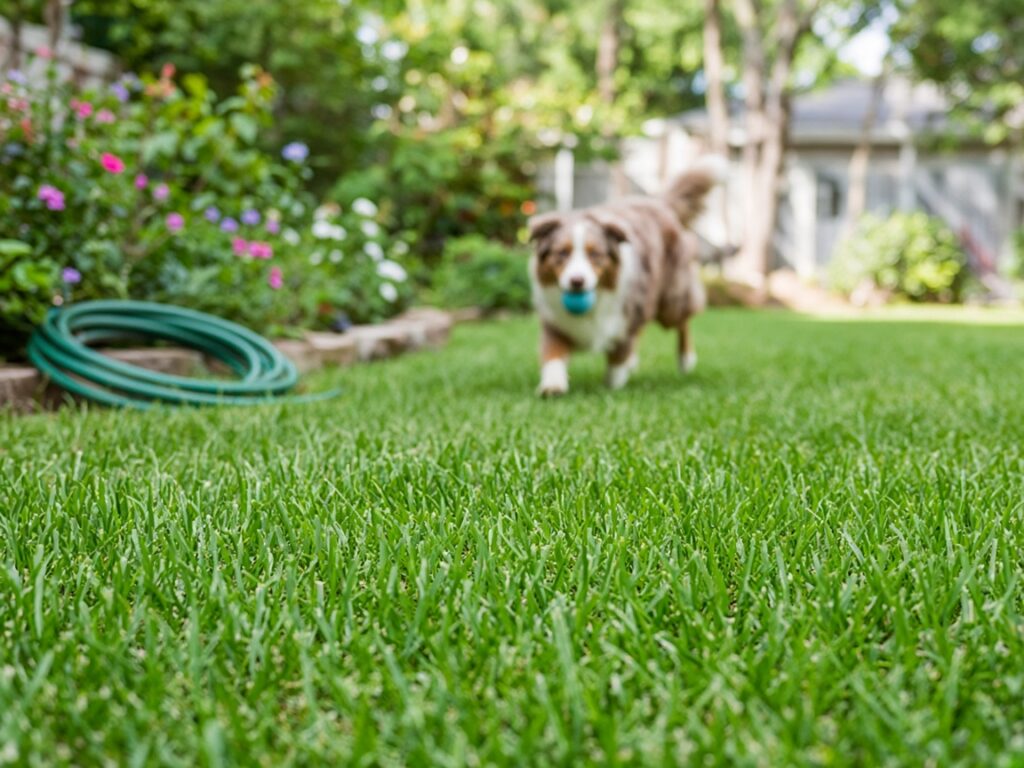
If your lawn has brown spots, bare patches, or oddly dark-green tufts, your dog is an easy suspect. The real story is a little more nuanced. University turf specialists generally agree that dog urine does most of the visible damage to lawns, and that dog feces harms grass more slowly. That slower damage adds up, and because you can remove feces, it’s the part you can actually control. Here’s what homeowners should know.
Why Dog Waste Affects Grass at All
Dog urine and feces both contain a lot of nitrogen. Nitrogen is a plant nutrient, which is why a little of it can make grass greener. In concentrated doses, it acts like fertilizer spilled in one spot. Mississippi State University Extension explains it this way: urine hits the lawn “all at once as a liquid fertilizer,” while feces “slowly releases the nitrogen over time.” Because stools are solid, owners have the option of removing them before turf damage occurs.
Urine vs. Feces: Which Causes What?
Urine: the usual cause of the classic “dog spot”
The textbook dog-urine spot is a straw-colored patch surrounded by a ring of dark-green, fast-growing grass. University of California Cooperative Extension says the soluble salts, mainly nitrogen compounds, in a concentrated dose of urine draw water out of grass blades and kill the tissue. The dark ring is grass responding to the extra nitrogen around the edge of the spot. NC State Extension notes these spots are often 3 to 6 inches across and can be mistaken for lawn diseases like brown patch or dollar spot.
Feces: slower, but it adds up
A single pile isn’t a lawn emergency. The problem is piles left in place, especially in the few spots dogs use again and again. That spot keeps getting nitrogen. The grass underneath is covered and walked on. Over weeks, those favorite spots can turn patchy. When grass thins, NC State notes, the open space invites weeds like crabgrass. And unlike urine, feces is something you can simply remove before it does much harm.
“Isn’t Dog Poop Basically Fertilizer?”
Not in the way people hope. Raw dog waste isn’t a safe or effective substitute for lawn fertilizer. It releases nitrogen unevenly, right where it lands, and it can carry parasites and germs. The USDA Natural Resources Conservation Service has published guidance on composting dog waste. Even properly composted dog waste, it says, should be used only for landscaping and revegetation, never on crops grown for people to eat, and the composting has to be done carefully to kill pathogens. Tossing raw piles on the lawn or into a garden bed is not the same thing.
Lawn Appearance, Odor, and Everyday Use
Beyond the grass itself, waste left on the lawn affects how you use the yard:
- Appearance: piles, discolored spots, and uneven growth make even a well-kept lawn look neglected.
- Odor: accumulated waste smells, especially in heat and after rain. That matters around patios, windows, and fence lines shared with neighbors.
- Mowing: running over piles spreads waste onto the mower, your shoes, and the rest of the lawn.
- Usability: nobody wants to play fetch, garden, or let kids run barefoot on a minefield.
The Health Side of a Dog-Friendly Lawn
Lawn damage isn’t the only reason to pick up. The CDC says dog poop can carry germs that make people and animals sick, and it recommends picking it up even in your own yard. Some parasites, like zoonotic hookworm, live in soil contaminated with animal feces and can enter bare skin. That’s one reason the CDC recommends disposing of animal waste quickly and wearing shoes where soil may be contaminated. See why you shouldn’t leave dog poop in your yard for a fuller, non-alarmist look at the risks.
What Homeowners Can Realistically Do
1. Pick up feces regularly
This is the single most effective step and the easiest one. It stops the nitrogen buildup and the covered patches under piles. Not sure how often? See how often you should pick up dog poop.
2. Water urine spots when you can
University of Maryland Extension notes that heavy watering soon after a dog urinates dilutes the salts and reduces damage. It’s not practical every time, but it helps in spots dogs use daily.
3. Keep the lawn healthy and watered
Extension sources consistently note that drought-stressed turf in hot weather suffers the most. UC Cooperative Extension also notes that spreading warm-season grasses such as St. Augustine and bermuda, common in Houston-area yards, fill in damaged spots faster than bunch-type grasses.
4. Give your dog a designated potty area
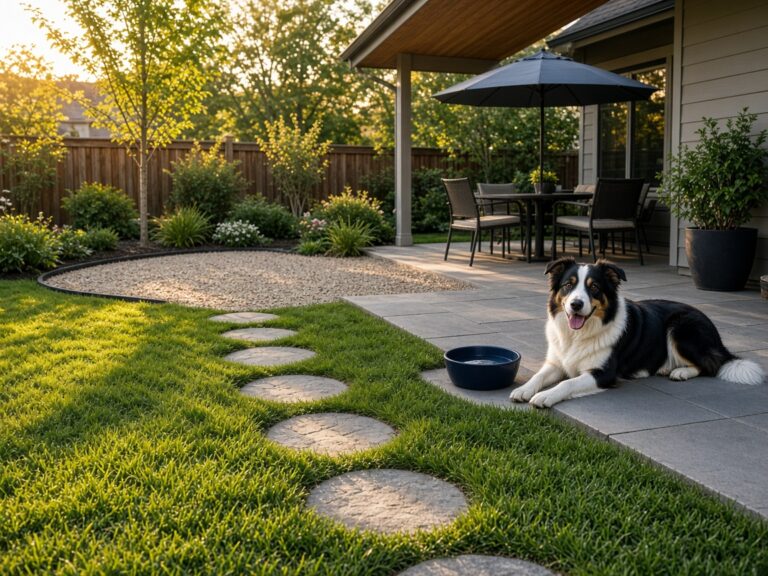
Mississippi State University Extension suggests training dogs to use a dedicated area with a surface like pea gravel or mulch. You may need a leash for a while to build the habit. It concentrates waste where it’s easy to find and keeps it off the grass you care about. Our guide to creating a cleaner, more pet-friendly yard has layout ideas.
5. Be skeptical of “miracle” fixes
Colorado State University Extension reviewed common remedies. It found no dietary supplements proven to reduce the frequency or severity of dog urine damage. Talk to your veterinarian before changing your dog’s diet or water for lawn reasons.
6. Repair spots once the cause is handled
Once waste is picked up regularly and urine spots are watered, damaged areas in spreading grasses often fill in on their own. Larger bare patches may need sod or plugs. A local lawn professional or extension office can recommend what works for your grass type.
The Bottom Line
Dog urine usually causes the dramatic spots. Dog feces does quieter damage, and it’s the part you can prevent. Regular pickup, a bit of watering, and a designated potty area go a long way toward a lawn that looks good and holds up to your dogs.
Let Us Handle the Scooping
If you’d rather spend your yard time on the lawn instead of scooping it, Heather’s Poop Scoop Service offers recurring and one-time cleanup, with a free yard deodorizer every visit.
Sources & Further Reading
- Mississippi State University Extension — “Dog-On-It” Lawn Problems
- University of California Cooperative Extension — Lawns ’n’ Dogs (PDF)
- NC State Extension — Dogs and Turfgrass Interactions
- University of Maryland Extension — Dog Urine Damage on Lawns
- Colorado State University Extension — Dog Urine Damage on Lawns: Causes, Cures, and Prevention
- USDA NRCS — Composting Dog Waste (PDF)
- CDC — Healthy Pets, Healthy People: Dogs
- CDC — About Zoonotic Hookworm