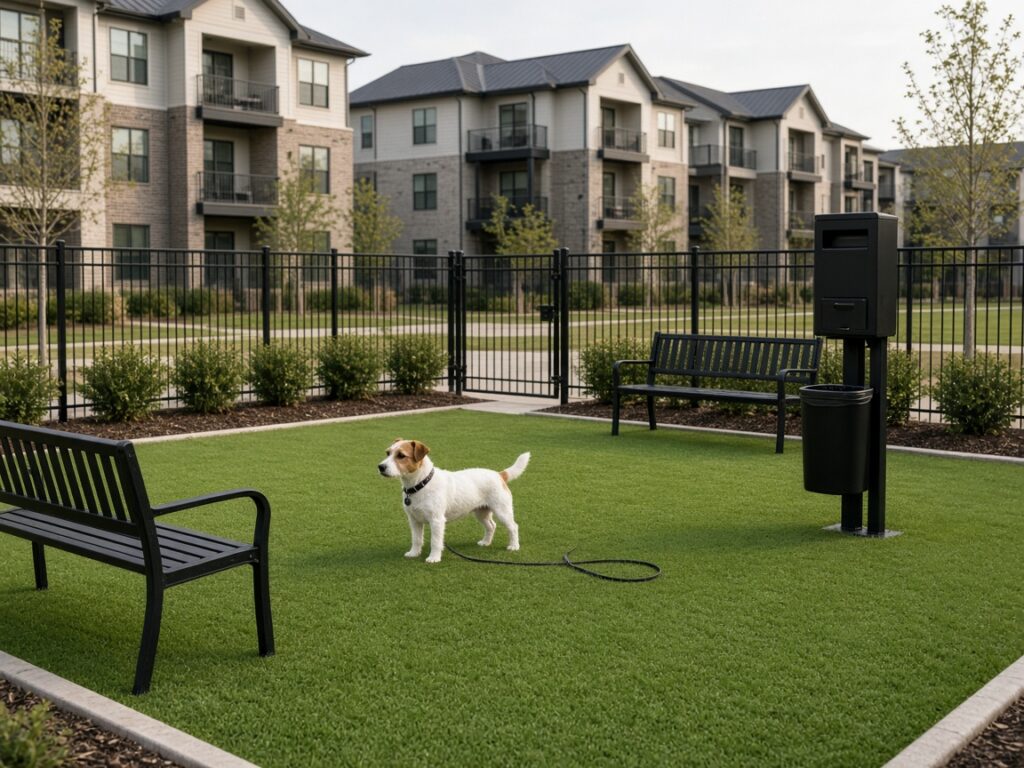
A backyard belongs to one household. A community dog run, an apartment pet area, or the greenbelt behind an HOA’s homes belongs to everyone, which often means no one feels fully responsible for it. For HOA boards and property managers, pet waste in shared spaces is one of those small issues that generates a surprising number of complaints. This pointer covers why shared pet areas are different, what to consider when planning cleanup, and how commercial service from Heather’s Poop Scoop Service works.
Why Shared Pet Areas Are Different
- More dogs in less space. A single pet relief area may serve dozens of dogs from many households, so waste builds up much faster than in any one backyard.
- Uneven compliance. Most residents pick up after their dogs. It only takes a few who don’t, or who miss a pile in the dark, to make an area unpleasant for everyone.
- No single owner watching. In a private yard, the homeowner sees the problem daily. In a common area, waste can pile up between maintenance visits without anyone reporting it.
- Many people use it. Residents, children, guests, and staff all walk through these areas.
- Drainage and runoff. Shared lawns often drain toward parking lots, storm drains, or detention ponds. The EPA calls pet waste a leading source of nutrient and bacteria pollution in urban waterways.
The Spaces That Need Attention
Community dog parks and dog runs
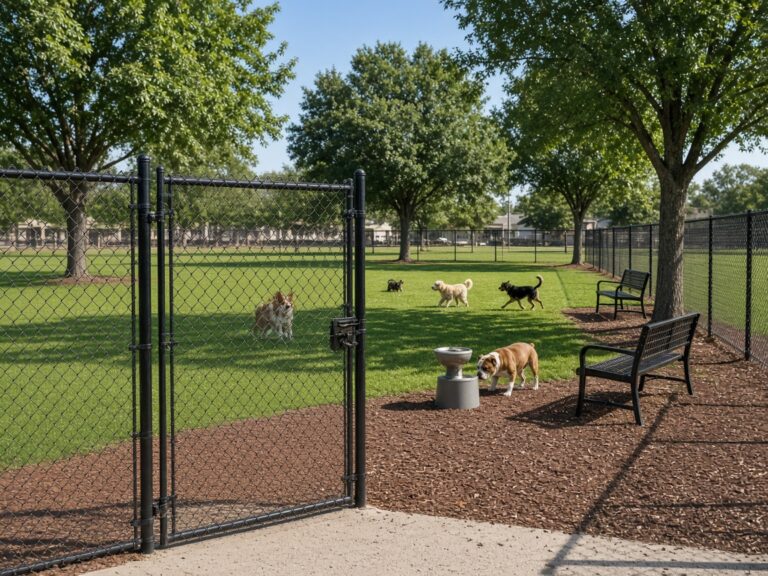
Fenced off-leash areas concentrate the most dogs in the smallest space. They need the most frequent attention and usually benefit from waste stations with bags and lidded bins. For more, see dog park cleanup: why regular pet waste removal matters.
Apartment pet relief areas
Many apartment communities set aside a strip of turf or grass for residents’ dogs. Because these are often small and close to buildings, walkways, and entrances, odor and appearance become noticeable quickly.
HOA common areas
Greenbelts, walking trails, entrance landscaping, and the grass along sidewalks aren’t designed as pet areas, but they get used as them. Waste in these places affects curb appeal and is often the first thing residents and visitors notice.
What Residents Expect
Residents generally expect shared spaces to be clean enough to walk through without watching every step, and clean enough for kids to play and dogs to sniff without worry. When those expectations aren’t met, complaints go to the board or the leasing office. Clear rules, convenient supplies, and dependable cleanup all help.
Within Houston city limits, Section 6-24 of the City Code requires anyone in control of a dog or cat to promptly remove and dispose of its feces in a sanitary manner, and to carry materials to do so. Many HOAs and apartment communities also have their own pet rules in their governing documents or leases. Your association’s attorney or management company can advise on how those rules apply and are enforced. We don’t provide legal advice.
Practical Management Tools
- Pet waste stations with bag dispensers and lidded trash bins at entrances to pet areas and along popular walking routes. The EPA’s stormwater guidance highlights stations and signs as common tools. In our region, H-GAC has donated pet waste stations to Harris County parks in the Cypress Creek and Spring Creek watersheds to reduce bacterial pollution.
- Clear, friendly signage explaining where dogs should go and that residents are expected to pick up.
- Regular bin emptying and bag restocking, since an empty dispenser or overflowing bin quickly leads to more waste left behind.
- Resident communication: reminders in newsletters, portals, or move-in packets.
- Professional cleanup on a set schedule to catch what residents miss.
How Often Should Shared Areas Be Serviced?
There’s no universal answer. It depends on:
- how many dogs use each area and how heavily;
- the size and layout of the areas, such as one dog run or several relief strips across a large property;
- visibility, since entrances and leasing-office areas may need more attention than a back corner;
- season and weather; and
- your budget and the other tools already in place, like stations and signage.
That’s why commercial service is quoted property by property instead of priced from a table.
Property-Management Considerations
- Define the scope: which areas are included, and which aren’t.
- Access: gates, codes, and any areas with restricted hours.
- Coordination: who on site is the point of contact, and how issues get reported.
- Waste handling: how collected waste will be handled on site. Waste rules can differ for commercial properties and vary by city. See why we don’t haul pet waste away for background.
- Written terms: scope, frequency, and price should be in writing before service starts.
Why a Customized Service Plan Makes Sense
Two properties with the same number of units can have completely different needs. One might have a single dog run by the pool. Another might have relief areas at every building plus a walking trail. A customized plan lets frequency and scope match your property instead of forcing it into a residential package.
How Commercial Service Works with Heather’s Poop Scoop Service
We provide commercial pet-waste removal for qualifying properties, including HOAs, apartment communities, dog parks, property managers, and other commercial properties in the communities we serve.
- Residential prices don’t apply. The prices on our Pricing page are for residential yards only.
- Every commercial property gets a customized quote based on the property and service requirements.
- A quote and service agreement come first. Submitting a quote request doesn’t book service or create an agreement. Service begins only after pricing is agreed and a service agreement is in place.
To start, use the commercial quote form. Tell us the property type, approximate size, the number and location of pet areas, and anything you already know about how many dogs live on site. Not sure your property is in our area? Check the service area map. You can also learn more about our team.
Request a Commercial Quote
Tell us about your community, and we’ll put together service information and a customized quote for your property.
Sources & Further Reading
- EPA — Stormwater Best Management Practice: Pet Waste Management (PDF)
- Houston-Galveston Area Council — Pet Waste Pollutes
- Harris County Commissioners Court — Acceptance of H-GAC pet waste stations for Spring Creek and Zube Parks
- City of Houston Code of Ordinances, Chapter 6 — Animals and Fowl (Sec. 6-24)
- CDC — Healthy Pets, Healthy People: Dogs