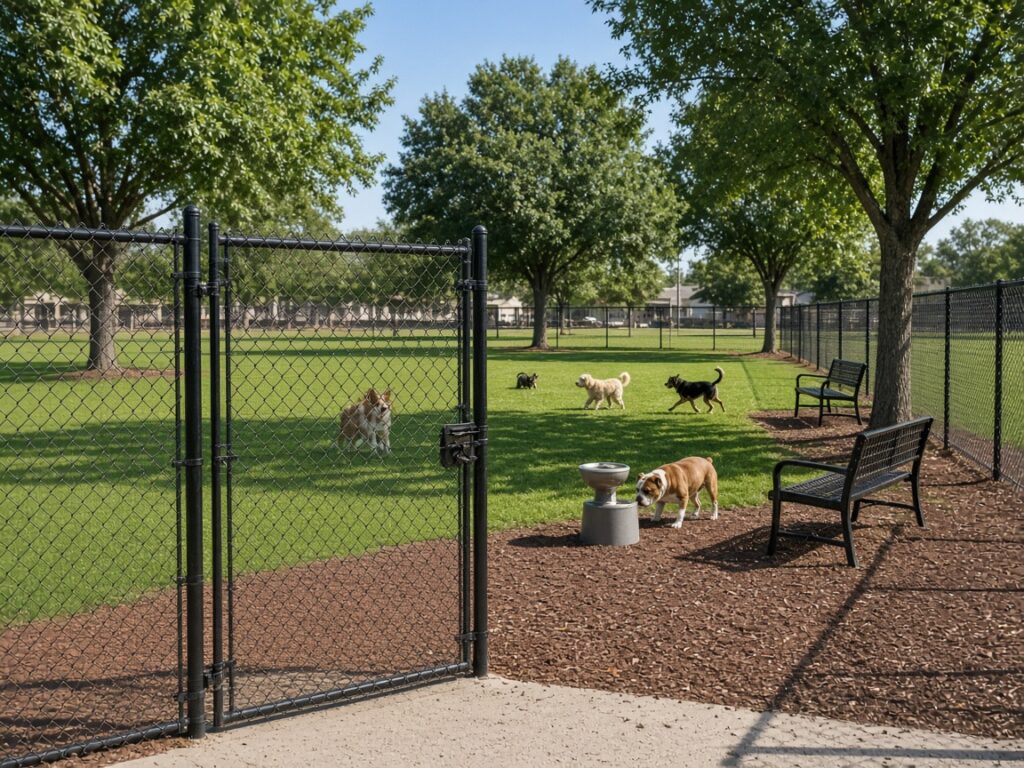
A good dog park is one of the best amenities a community can offer. Dogs get to run, owners get to socialize, and everyone goes home a little happier. But a dog park also puts more dogs in a smaller space than almost anywhere else, which means waste builds up quickly and every visitor shares the consequences. This pointer explains why regular waste removal matters so much at dog parks, and what the people who manage them can do about it.
A High Concentration of Dogs
In a backyard, one or two dogs share the space. In a busy dog park, dozens of dogs may pass through in a day, and many will relieve themselves shortly after arriving. Even if most owners pick up diligently, piles get missed while owners are chatting, watching another dog, or dealing with the gate. Across many visits, that adds up fast.
Parks that serve apartment communities or HOAs often see steady use morning and evening, every day of the week. There’s rarely a quiet stretch when waste stops building up.
Why Everyone Shares the Consequences
At home, you decide how clean your yard is. At a dog park, everyone’s dog walks, sniffs, rolls, and plays on the same ground. That’s what makes dog parks fun and why cleanliness depends on the whole community, not just the conscientious owners.
Health and Hygiene Considerations
Dog parks aren’t dangerous, and most visits are completely uneventful. But veterinary and public-health sources point to a few things worth understanding.
Giardia and other parasites spread dog to dog
The CDC explains that dogs can pick up Giardia by swallowing even small amounts of contaminated poop from another dog, rolling or playing in contaminated soil, or licking their bodies after touching contaminated surfaces. The Ohio State University College of Veterinary Medicine notes that Giardia cysts can survive in the environment for months. The highest risk of infection is in young dogs in densely populated settings, which describes a busy dog park well.
Soil and grass are hard to clean
The Companion Animal Parasite Council notes that soil, grass, and standing water are difficult to decontaminate, and recommends removing feces daily. Once parasite eggs or cysts are in the ground, you can’t easily clean them out. Prompt removal is the main defense.
People, too
The CDC notes that some parasites from dog feces, such as hookworm, live in contaminated soil and can enter bare skin, while roundworm eggs can reach people through contaminated hands. The risk is low with basic precautions like shoes, handwashing, and keeping kids from putting dirty hands in their mouths. Clean ground lowers it further. It’s also worth noting that the CDC says you’re unlikely to get Giardia from dogs, since the types that infect dogs usually aren’t the ones that make people sick.
The Environmental Side
Dog parks are often built on open land near drainage channels, detention ponds, or greenways. The EPA notes that stormwater can pick up pet waste left on the ground and carry it into nearby streams, lakes, and rivers, where it can make people and animals sick and feed weed and algae growth. Around Houston, H-GAC explains that storm drains connect to creeks and bayous. Regular cleanup keeps a busy park from becoming a pollution source for the waterway next to it. For more, see the environmental impact of dog waste.
Visitor Experience
A clean park gets used and a messy one gets avoided. Odor, flies, and piles near benches and gates are what people remember. For community parks, that shapes residents’ view of the whole property. For apartment and HOA parks, it becomes a complaint to management.
Practical Management for Dog Park Operators
Set clear rules
The City of Houston’s posted dog park rules are a useful model. Owners must have visible pet waste disposal materials at all times and must pick up after their dogs and dispose of the waste in a trash receptacle. Houston’s rules also limit visitors to two dogs per person and don’t allow puppies under four months old. Your own rules will depend on your property.
Make the right thing easy
- Waste stations with bag dispensers at every entrance and near popular spots. The EPA’s stormwater guidance describes stations and signs as common tools, and H-GAC has provided stations for Harris County parks in the Cypress Creek and Spring Creek watersheds.
- Lidded trash bins emptied on a regular schedule, since an overflowing bin discourages people from using it.
- Restocked bags, because an empty dispenser means waste left behind.
- Good lighting if the park is open early or late, so owners can see what to pick up.
Plan for what owners miss
Even with great rules and supplies, some waste gets missed. A regular professional sweep of the entire park, including fence lines, corners, entrances, and around benches and water stations, catches what individual owners don’t.
Professional Service Considerations
When planning professional cleanup for a dog park, think about:
- Frequency: busier parks need more frequent visits. Usage, size, and season all factor in.
- Scope: just the fenced area, or also walking paths, entrances, and nearby turf?
- Timing and access: gate access and visits that work around peak hours.
- Waste handling on site: where collected waste goes, which depends on the property’s trash setup.
- Written agreement: scope, frequency, and price agreed in writing.
Heather’s Poop Scoop Service provides commercial pet-waste removal for dog parks, HOAs, apartment communities, and other commercial properties. Commercial service is customized to each property. Residential prices don’t apply, and service starts only after a quote and service agreement. For more on managing shared spaces, see pet waste management for HOAs and apartment communities.
The Bottom Line
Dog parks concentrate lots of dogs on shared ground, and parasites like Giardia can linger in soil and spread dog to dog. Clear rules, easy-to-use stations, and a dependable cleanup schedule keep a dog park healthy, pleasant, and worth visiting.
Managing a Community Dog Park?
Tell us about your park, including its size, how busy it is, and what’s already in place, and we’ll follow up with service information and a customized quote.
Sources & Further Reading
- City of Houston Parks and Recreation — Dog Parks and Dog Park Rules
- CDC — About Giardia and Pets
- The Ohio State University College of Veterinary Medicine — Canine Giardiasis Fact Sheet (PDF)
- Companion Animal Parasite Council — Giardia Guidelines
- CDC — About Zoonotic Hookworm
- CDC — About Toxocariasis
- EPA — Stormwater Best Management Practice: Pet Waste Management (PDF)
- Houston-Galveston Area Council — Pet Waste Pollutes