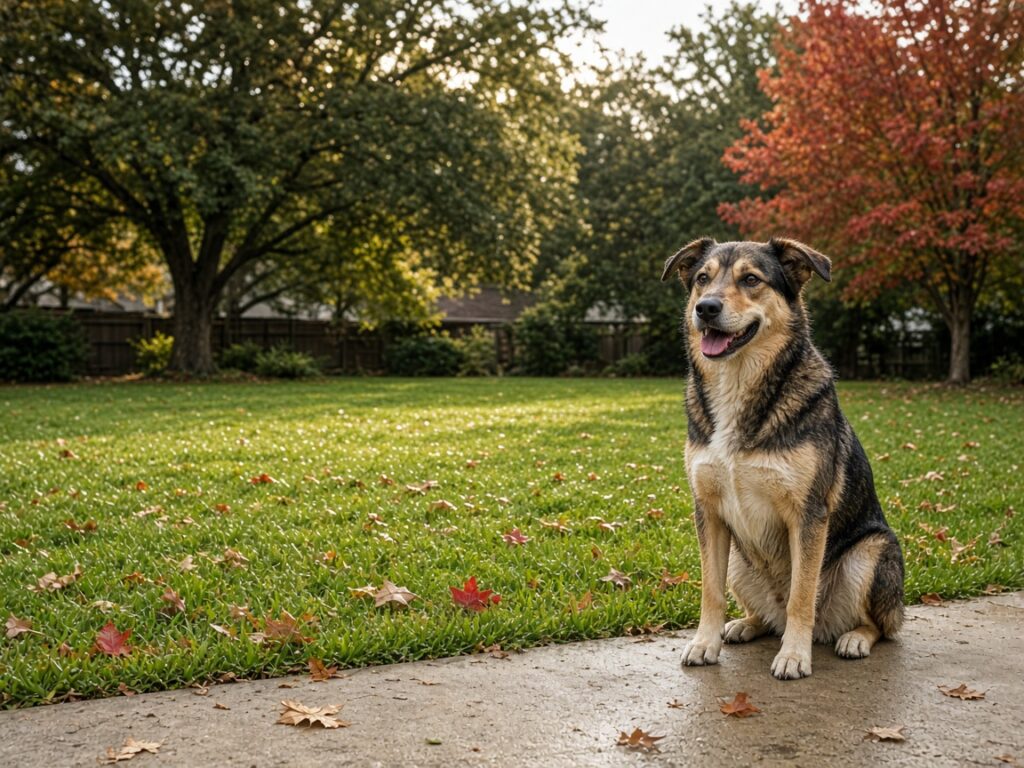
Your dog’s schedule may not change much through the year, but your yard does. Heat changes how fast waste starts to smell. Heavy rain changes where it goes. Tall spring grass and fall leaves change how easily you can find it. In Northwest Houston and surrounding communities, where yards stay green and in use most of the year, pet waste cleanup never really takes a season off. Here’s how each season affects your yard and how to adjust.
Spring: Growth, Storms, and Catching Up
Spring is when many yards show what happened over the cooler months. Grass starts growing again, family time moves back outdoors, and spring storms roll through.
- Fast-growing grass hides waste. Thick, taller grass makes piles easy to miss and easy to mow over. Scoop before every mow.
- Rain moves waste. H-GAC notes that rain washes pet waste into storm drains that lead to creeks and bayous, and recommends picking up especially when rain is in the forecast.
- A good time for a reset. If waste built up over the winter, a thorough one-time cleanup before the yard gets heavy use makes a regular routine much easier to keep up.
- Lawn recovery. Warm-season grasses common in Houston-area yards, such as St. Augustine and bermuda, spread to fill in damaged spots. University of California Cooperative Extension notes these spreading grasses recover from dog damage faster than bunch-type grasses. Removing waste lets that regrowth happen.
Summer: Heat and Odor
Summer is when people notice pet waste most, often with their noses.
- Heat speeds up odor. Waste that sits for several days in the heat smells stronger, especially near patios, windows, and shared fence lines.
- The trash cart needs attention too. Keep the lid closed and, if you can, park the cart in the shade. Houston’s city code asks that pet waste in containers be wrapped separately and securely so odor isn’t offensive to collection crews or the public. Rinsing the cart occasionally helps.
- Stressed lawns suffer more. University of Maryland Extension notes that dog urine damage is more likely on drought-stressed turf in hot weather. Watering spots where dogs go helps, and so does keeping feces off the grass.
- More time outside. Kids out of school, cookouts, and pool days mean more people using the yard. This is when frequent cleanup pays off most.
- Keep yourself cool. If you scoop yourself, do it in the early morning or evening, and wear shoes. The CDC notes hookworm larvae in contaminated soil can enter bare skin.
Heavy Rain: Mud, Runoff, and Soft Waste
The Houston area can get heavy downpours in almost any season, so rain deserves its own section.
- Scoop before the storm when you can. The EPA notes that stormwater picks up pet waste left on the ground and carries it into waterways, where it adds bacteria and nutrients.
- After rain, waste is harder to pick up. Softened piles break apart and can be pressed into the ground by paws and feet.
- Mud tracks everything. Muddy paws bring the yard inside. A clean yard means less of it is waste.
- Watch low spots. Areas where water collects can also collect washed-around waste. Check them after heavy rain.
- Firm up muddy paths. Stepping stones or mulch on your dog’s main routes reduce mud and make cleanup easier. See how to create a cleaner, more pet-friendly yard.
Fall: Leaves and Busy Schedules
- Leaves hide waste. Falling leaves from live oaks and other trees can cover piles, which turns raking into an unpleasant surprise. Scoop before you rake or blow leaves.
- Schedules get busy. School, sports, and holidays crowd out yard chores, and that’s exactly when waste starts to build up.
- Yards are still in use. Fall weather is often some of the nicest for being outdoors, so it’s a good season to keep the yard ready for guests.
Winter: Milder Here, but Not Time Off
Winters in the Houston area are generally milder than in much of the country, and dogs keep going outside every day. Some things to keep in mind:
- Cooler weather means less odor, not less waste. Waste still piles up at the same rate. It just doesn’t announce itself as loudly.
- Parasites don’t take a break. The CDC notes that Giardia germs can survive for months in soil and water. Cool, damp conditions don’t make old waste harmless.
- Shorter days. If you scoop after work, it may be dark. Keep a flashlight by the door, or shift to weekend daytime checks plus quick weekday passes.
- Plan for spring. Keeping up through winter means no big spring catch-up job.
Adjusting Cleanup Frequency by Season
Your baseline frequency depends mostly on the number of dogs and the size of the yard (see how often you should pick up dog poop). Seasons are a reason to nudge it:
- Go more often in hot weather, rainy stretches, and busy outdoor seasons, and when a new puppy arrives.
- Don’t go less often in winter just because the yard smells better. The waste is still there.
- Add a pass before storms, mowing, raking, and outdoor gatherings.
If you use a recurring service, you choose the frequency that fits. Heather’s Poop Scoop Service offers twice-weekly, weekly, and every-other-week visits with no contract, plus one-time cleanups for spring resets or before a big event. See one-time cleanup vs. recurring service to compare.
The Bottom Line
Every season changes something: odor in summer, runoff with heavy rain, hidden piles under spring grass and fall leaves, and darker evenings in winter. The constant is that dogs keep going. A steady routine, adjusted for the weather, keeps your yard cleaner all year.
A Cleaner Yard in Every Season
Let us keep up with the yard while you enjoy it, from spring cookouts to fall football weekends. See what’s included on our pricing page or check that you’re in our service area.
Sources & Further Reading
- Houston-Galveston Area Council — Pet Waste Pollutes
- EPA — Stormwater Best Management Practice: Pet Waste Management (PDF)
- University of California Cooperative Extension — Lawns ’n’ Dogs (PDF)
- University of Maryland Extension — Dog Urine Damage on Lawns
- CDC — About Zoonotic Hookworm
- CDC — About Giardia and Pets
- City of Houston Code of Ordinances, Chapter 39 (Sec. 39-61, containers and pet feces)