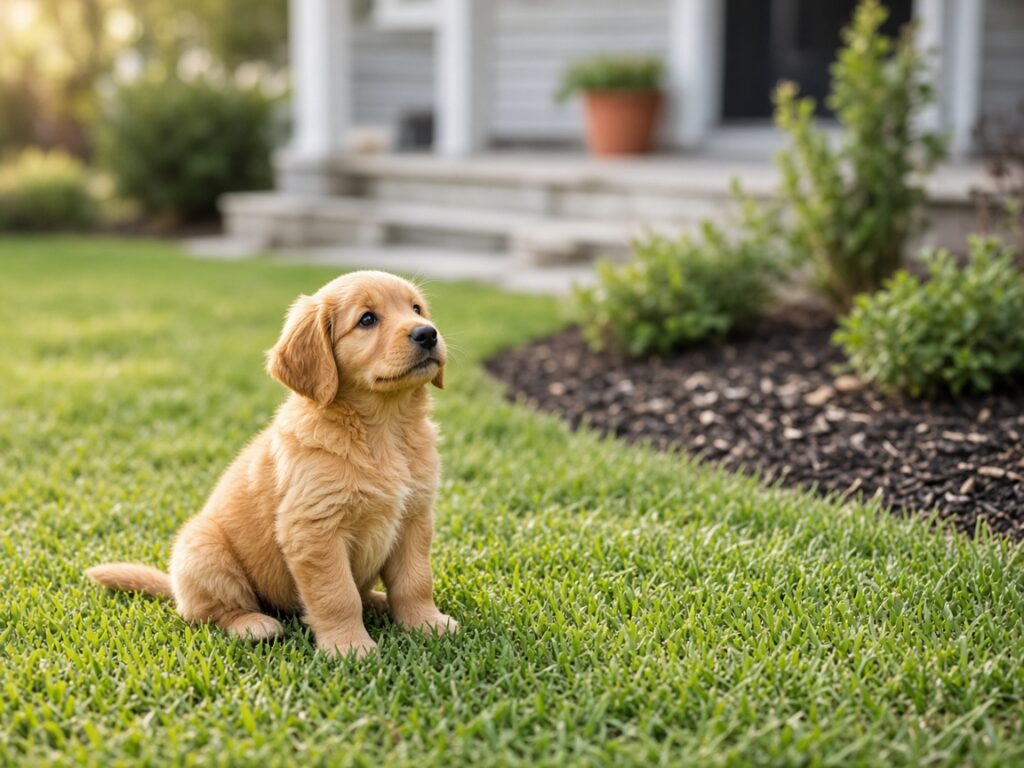
Bringing home a puppy means a lot of joy and a lot of trips outside. Potty training works best with a steady routine. That routine sends your puppy to the same patch of yard many times a day, so the potty spot fills up faster than most new owners expect. Keeping that spot clean is part of training, not just housekeeping. Here’s how to stay ahead of it while your puppy learns.
This article covers yard cleanup during potty training. It isn’t veterinary or training advice. For questions about your puppy’s health, parasite prevention, or behavior, talk with your veterinarian or a qualified trainer.
What a Typical Potty-Training Routine Looks Like
Most reputable training guides describe the same basic pattern. The American Kennel Club, VCA Animal Hospitals, and ASPCA Pet Health Insurance all recommend taking a young puppy outside:
- first thing in the morning and last thing at night;
- right after waking up from naps;
- after meals and after drinking water;
- after play sessions and time in a crate; and
- regularly in between. VCA suggests roughly every one to two hours while awake, and more often during high-energy play.
The AKC notes that depending on your puppy’s age, this can mean going outside “a dozen times or more each day.” Many guides also recommend using the same spot every time so your puppy learns where to go.
Why the Yard Fills Up Faster
That routine is great for training and tough on the potty spot:
- Lots of trips. Frequent potty breaks mean frequent deposits, often several a day.
- One small area. Using the same spot is the point of training, so waste concentrates there.
- Unpredictable timing. Puppies don’t always go on the first try, so they may go later somewhere else in the yard.
- Curious puppies. Young dogs sniff, dig, and sometimes eat things they shouldn’t, including poop. A clean yard means less for them to find.
Why Consistent Cleanup Matters
It supports training
A potty spot covered in old waste is unpleasant for your puppy too. Some dogs avoid stepping in a messy area and go somewhere else, which undoes the habit you’re building. Keep the spot usable, and keep the rest of the yard clean so the potty spot stays the obvious choice.
It lowers parasite exposure
The CDC notes that young animals, puppies especially, are more likely to be infected with roundworms and hookworms. Puppies often get roundworm from their mother before birth or while nursing, and the eggs pass into the soil through the puppy’s poop. The CDC’s advice for households with pets is to pick up pet waste daily, wash your hands afterward, and have a veterinarian test and treat puppies for worms. Your vet will recommend the right schedule. Your part in the yard is to remove waste before eggs have a chance to settle into the soil.
It protects the rest of the family
New puppies often arrive in homes with kids who are excited to play outside. The CDC recommends picking up dog poop especially where children play and teaching kids not to eat dirt. A clean yard makes it easier to say “yes” to playtime.
Setting Up a Puppy-Friendly Potty Spot
- Pick a spot close to the door. In the early weeks you’ll be making a lot of trips, often in the rain or the dark.
- Choose a surface that’s easy to clean. Some owners use grass. Others use a small area of mulch or pea gravel, which Mississippi State University Extension suggests as a dog potty area to protect the lawn.
- Keep it away from play areas, gardens, and the patio table.
- Make it easy to reach in any weather. A stepping-stone path helps on muddy days.
A Simple Puppy Yard-Cleanup Routine
- Scoop right after each potty break when you can. You’re already outside, and fresh waste is easiest to pick up.
- Do a quick yard check once a day for anything that happened outside the potty spot.
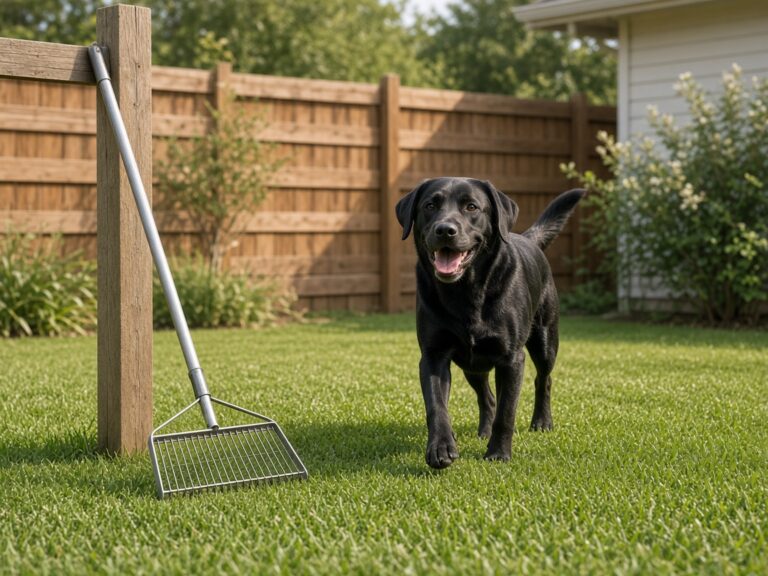
- Keep supplies by the door: a scooper, bags, gloves, and hand soap or sanitizer inside.
- Bag it and put it in the trash with the lid closed. In Houston, the city code asks that pet feces be wrapped separately and securely before going into a container.
- Wash your hands every time, and help kids do the same after playing outside.
- Pick up before rain so waste doesn’t wash into the soil or toward storm drains.
What Changes When Your Puppy Grows Up
As puppies mature, they gain bladder control and need fewer trips outside. Training guides note they can hold it longer each month. That means fewer potty breaks, more predictable timing, and usually a less intense cleanup routine. Adult dogs still need their waste picked up, though. The CDC’s “pick up promptly” advice applies to dogs of every age. Your routine shifts from “after every trip” to a regular schedule based on your dog and your yard. See how often you should pick up dog poop for adult-dog guidance.
If your puppy joins an older dog, or you’re considering a second dog, our guide to keeping a multi-dog yard clean covers what changes with more dogs.
Practical Tips from the Potty-Training Trenches
- Use a leash in the early days. Leading your puppy to the potty spot keeps waste in one place and makes it easy to find.
- Keep a flashlight by the door for nighttime trips so you can see what needs to be picked up.
- Don’t let piles build up “until the weekend.” With a puppy, a few days of waste is a lot.
- Get help if you need it. Training a puppy is a lot of work. Handing off yard cleanup frees you to focus on training.
The Bottom Line
Potty training puts a lot of waste in a small area in a short time. Scooping after each trip, checking the yard daily, and handwashing keep the yard clean, support training, and reduce parasite exposure while your puppy grows up.
Focus on the Puppy, Not the Poop
Heather’s Poop Scoop Service offers twice-weekly, weekly, and every-other-week service with no contract, so you can pick the schedule that fits life with a new dog. See our FAQ or pricing to get started.
Sources & Further Reading
- American Kennel Club — How to Potty Train Your Puppy
- VCA Animal Hospitals — Housetraining for Puppies and Dogs
- ASPCA Pet Health Insurance — How to House Train a Puppy
- CDC — What Causes Parasitic Diseases
- CDC — How Toxocariasis Spreads
- CDC — Healthy Pets, Healthy People: Dogs
- Mississippi State University Extension — “Dog-On-It” Lawn Problems