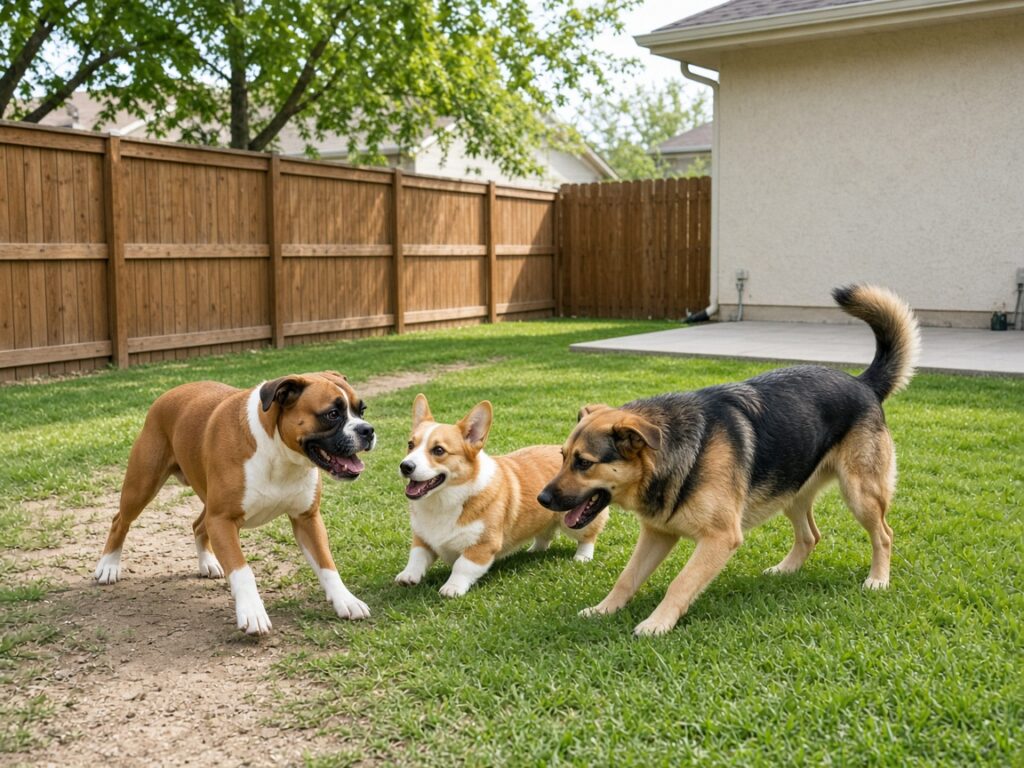
One dog in the yard is a chore. Two or three is a system. Multi-dog households know the feeling of turning your back for a few days and finding the yard looks like a week went by. The good news is that keeping a multi-dog yard clean isn’t about working harder. It comes down to a few smart habits and knowing when to get help. Here’s a practical approach.
Why Waste Builds Up So Much Faster
The math is simple but easy to underestimate. Every dog adds its own daily output, so waste builds up in proportion to the number of dogs using the yard. A routine that works for one dog falls behind quickly with three. Several other things compound it:
- Dogs follow each other. Dogs often go where other dogs have gone, which concentrates waste in a few favorite spots.
- More running, more tracking. Dogs chasing each other step in and spread waste that a single dog might have avoided.
- Harder to spot. With several dogs, you can’t easily keep track of where and when each one went, so fresh piles hide among older ones.
- Shared germs. The CDC notes that parasites like Giardia can spread easily from one pet to another through contaminated soil and surfaces. Cornell University’s College of Veterinary Medicine adds that one infected dog increases the exposure risk for other dogs in the household.
How Multiple Dogs Change the Workload
It’s not just more piles. It’s more time. A quick pass that takes five minutes with one dog can take twenty with three, because you’re covering the same ground more carefully and filling more bags. And if you skip a few days, the job grows faster than you’d expect. That’s why a multi-dog yard rewards short, frequent cleanups over occasional big ones. For more on timing, see how often you should pick up dog poop.
Step 1: Map Your High-Traffic Areas
Spend a few days noticing where your dogs actually go. Most multi-dog yards have predictable zones:
- along fence lines, especially where dogs patrol or bark at neighbors;
- the corner farthest from the back door;
- behind or beside sheds, shrubs, and play equipment;
- the first patch of grass off the patio or dog door; and
- worn paths where dogs run the same loop.
Knowing these zones lets you check the most likely spots first on busy days. It also shows you where lawn wear is worst. For why concentrated waste is hard on grass, see does dog poop hurt your grass?
Step 2: Set a Routine You Can Actually Keep
- Do a daily quick sweep of the hot spots. Even a two-minute check of the usual zones keeps piles from getting stepped in and spread.
- Do a full inspection a few times a week. Walk the whole yard in a back-and-forth pattern, including under bushes and along the fence.
- Scoop after the dogs’ main outings. For many households that’s after breakfast and after dinner, when dogs most often go.
- Split the job. If family members share dog duties, assign days so nobody assumes someone else did it.
- Scoop before rain and before mowing. Rain softens waste and helps carry it toward storm drains. Mowing over piles spreads them.
Step 3: Inspect with Fresh Eyes
After the dogs have been out, do a “last look” scan from the patio. Also watch for changes that are worth mentioning to your veterinarian, such as unusual stool, diarrhea that doesn’t clear up, or a dog that suddenly avoids its usual spot. We’re not giving veterinary advice here. Noticing is simply easier when the yard is clean enough that changes stand out.
Step 4: Plan Storage and Disposal
More dogs means more bags between trash days, so plan for it:
- Bag securely. The CDC recommends bagging pet waste and putting it in the trash. In Houston, the city code asks that pet feces go into containers wrapped separately and securely.
- Keep the cart lid closed. Houston’s code also says containers shouldn’t be overloaded to the point that the lid won’t close properly. In summer, a closed lid helps with odor and flies.
- Watch cart capacity. If the cart regularly fills up before trash day, check with your trash provider about options. Collection rules vary by city, HOA, or MUD.
- Keep it away from the house. Store the cart in a shaded spot away from windows and the patio if your provider’s rules allow.
- Skip the compost pile. USDA guidance says dog waste needs careful, dedicated composting methods, and even then the result shouldn’t go on food crops.
Step 5: Make the Yard Work for You
Some multi-dog households train dogs to use a designated potty area with a surface like mulch or pea gravel. Mississippi State University Extension suggests this to reduce lawn damage, and it makes cleanup faster because waste ends up in one place. See how to create a cleaner, more pet-friendly yard for layout ideas.
When Recurring Professional Service Makes Sense
Professional service may be a good fit if:
- you keep falling behind even with good intentions;
- weekends turn into big cleanup sessions;
- you travel, work long hours, or have physical limits that make scooping hard;
- the yard is big enough that thorough inspections take real time; or
- you just want the yard to be ready whenever you are.
Heather’s Poop Scoop Service charges no extra fee for additional dogs. Pricing is based on yard size (per 1/8 acre) and visit frequency. Each visit includes the first two bags, each additional bag is $5, and every service includes a free yard deodorizer. With several dogs, a weekly or twice-weekly schedule generally keeps up better than every other week. If the yard is already overwhelmed, a one-time cleanup can reset it first. Compare options in one-time cleanup vs. recurring service.
The Bottom Line
More dogs means waste builds up faster, clusters in the same spots, and spreads more easily. A daily hot-spot sweep, regular full inspections, good bagging and cart habits, and a little help when you need it will keep a multi-dog yard enjoyable.
More Dogs, No Extra Dog Fee
Let us keep up with the pack. Recurring service has no contract, and you can cancel anytime.
Sources & Further Reading
- CDC — About Giardia and Pets
- Cornell University College of Veterinary Medicine — Giardia: Infection, Treatment and Prevention
- CDC — Healthy Pets, Healthy People: Dogs
- Mississippi State University Extension — “Dog-On-It” Lawn Problems
- City of Houston Code of Ordinances, Chapter 39 (Sec. 39-61, containers)
- USDA NRCS — Composting Dog Waste (PDF)
- Houston-Galveston Area Council — Pet Waste Pollutes