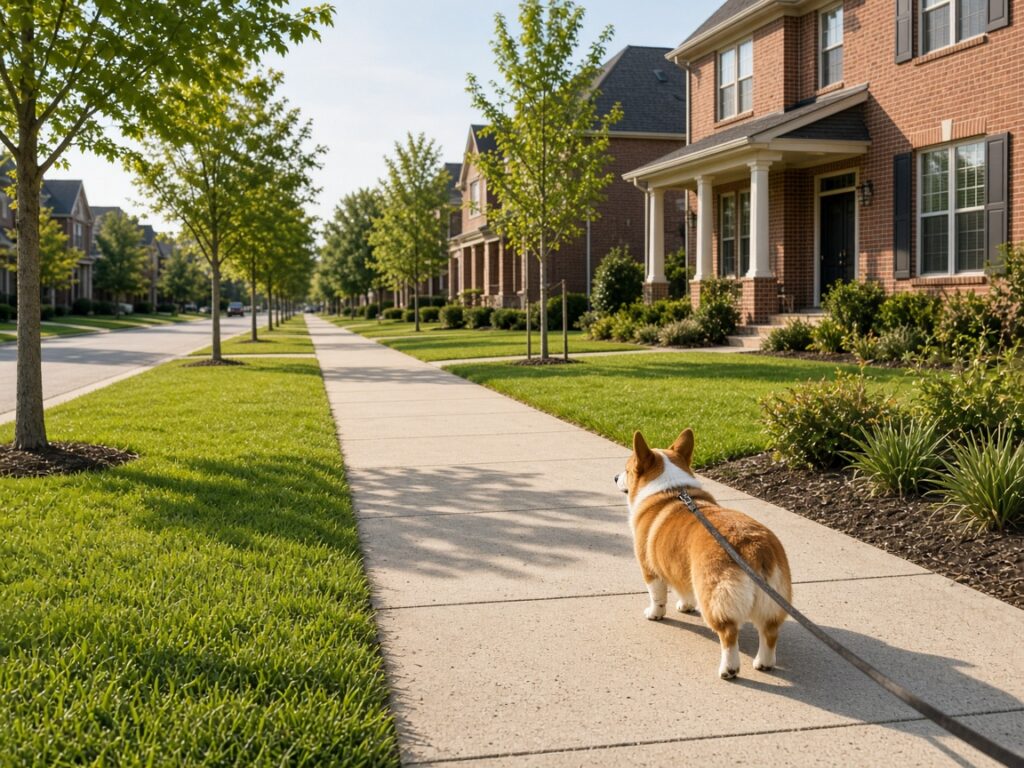
Your yard is yours. But pet waste has a way of reaching past the property line. It shows up as odor drifting over the fence, in runoff flowing to the street, on the sidewalk in front of your house, and in how your home looks to everyone who walks by. Keeping a clean yard is one of those small things that makes a street feel cared for. This pointer looks at why it matters beyond your own fence and how to be the kind of dog-owning neighbor people appreciate.
Neighborhood Cleanliness Is Shared
Most neighborhoods are a patchwork of small spaces that everyone experiences together: front lawns, sidewalks, parkways, greenbelts, and the view from the street. When one yard or one stretch of sidewalk regularly has pet waste, it changes how the whole block feels. The reverse is true too. Well-kept yards encourage more of the same.
Shared Expectations
Most dog owners already agree on the basics: pick up after your dog on walks, keep your yard reasonably clean, and don’t let your dog’s habits become your neighbors’ problem. Many neighborhoods also have HOA rules or deed restrictions that address pets, yard upkeep, or nuisances. What those rules require varies from community to community, so check your own HOA documents or ask your management company for specifics.
Inside Houston city limits, Section 6-24 of the City Code requires anyone in control of a dog or cat to promptly remove and dispose of feces left by the animal in a sanitary manner, and to carry materials to do so. Violations carry a fine of $75 to $500. The ordinance gives an affirmative defense to the owner of the premises, or the owner’s agent, where the animal leaves the feces. In practical terms, it’s aimed at waste left on property that isn’t yours, like sidewalks, parks, and neighbors’ lawns. Other cities in the area have their own ordinances. This is general information, not legal advice.
Children
Kids don’t stay in their own yards. They cut across lawns, chase balls into the parkway, and play on sidewalks and in common areas. The CDC recommends picking up dog poop especially in areas where children may play. Some parasites spread through contaminated soil or dirty hands, such as roundworm eggs, or through bare skin in contaminated soil, such as hookworm larvae. A neighborhood where waste gets picked up is simply a nicer place for kids to be kids.
Other Pets
Neighborhood dogs sniff the same patches of grass on their daily walks. The CDC notes that dogs can pick up Giardia by swallowing even small amounts of contaminated poop from another dog or by rolling in contaminated soil. Picking up after your own dog, on walks and near the edges of your property, helps protect your neighbors’ pets as well as your own.
Walkways and Common Areas
Sidewalks, trails, and HOA common areas get the most foot traffic and the least attention. They’re also where a single missed pile gets stepped in and tracked into someone’s house or car. A few habits make a real difference:
- carry bags on every walk (inside Houston city limits, Section 6-24 requires it), and grab an extra in case you find someone else’s;
- use the pet waste stations your community provides, and let management know when they’re empty;
- don’t leave tied bags on the curb or by the trail “to grab later”; and
- keep the parkway and front lawn clean, since that’s the part of your yard everyone else uses.
Odor
Odor is often the first thing neighbors notice, especially in Houston-area heat, and it doesn’t respect fences. Waste that sits in the yard for days, or a trash cart with its lid propped open, can affect the people next door every time they step outside. Regular pickup, a closed cart lid, and a shady spot for the cart help. Houston’s city code asks that pet waste placed in trash containers be wrapped separately and securely, partly so odor isn’t offensive to collection crews or the public.
Runoff Doesn’t Stop at the Property Line
When it rains, water runs across yards, down driveways, and into the street. The EPA notes that stormwater picks up pet waste left on the ground and carries it toward storm drains and local waterways. In the Houston area, H-GAC explains that storm drains connect to creeks and bayous. So a yard full of waste isn’t just a private concern. It contributes a little to something the whole community shares. For more, see the environmental impact of dog waste.
Responsible Pet Ownership
Being a responsible dog owner goes beyond food, walks, and vet visits. It includes making sure your dog is a good neighbor too:
- pick up after your dog promptly, at home and away;
- bag waste and put it in the trash with the lid closed;
- keep up with the veterinary care and parasite prevention your vet recommends; and
- keep your dog in your own yard, and out of your neighbors’ flower beds.
Being a Considerate Neighbor
- Watch the shared fence line. Dogs often patrol and go along fences. Keep those areas especially clean.
- Scoop before gatherings, whether yours or your neighbor’s. Nobody wants odor drifting over a backyard party.
- Talk kindly. If a neighbor’s dog waste is affecting you, a friendly conversation usually works better than a complaint. Everyone has busy weeks.
- Get help when life gets busy. Travel, long work hours, new babies, and injuries happen. A professional poop scoop service keeps your yard neighbor-friendly when you can’t.
For layout ideas that make keeping up easier, see how to create a cleaner, more pet-friendly yard.
The Bottom Line
A clean yard affects more than your own grass. It shapes what your neighbors smell, where their kids and dogs play, how clean the sidewalks stay, and what flows into the street when it rains. Picking up after your dog is one of the easiest ways to be a good neighbor.
Be the Yard Everyone Appreciates
We’ll handle the scooping so your yard stays clean for you and your neighbors. Check our service area and get started today.
Sources & Further Reading
- City of Houston Code of Ordinances, Chapter 6 — Animals and Fowl (Sec. 6-24, Defecation by dogs or cats)
- CDC — Healthy Pets, Healthy People: Dogs
- CDC — About Toxocariasis
- CDC — About Zoonotic Hookworm
- CDC — About Giardia and Pets
- EPA — Stormwater Best Management Practice: Pet Waste Management (PDF)
- Houston-Galveston Area Council — Pet Waste Pollutes
- City of Houston Code of Ordinances, Chapter 39 (Sec. 39-61)