Ask ten dog owners how often they scoop the yard and you’ll get ten answers, from “every time the dog goes” to “when the grass needs mowing.” There is no official number that applies to every yard. There is a clear consensus from public-health agencies that the answer should be closer to “promptly” than “eventually.” Here’s what that means in practice and how to find the right rhythm for your dogs, your yard, and your schedule.
What Health Agencies Actually Recommend
The CDC’s guidance for dog owners is straightforward: always pick up dog poop and dispose of it properly, “even in your own yard, and especially in areas where children may play.” Its parasite-prevention advice sums it up as the “four Ps”: Pick up Pet Poop Promptly, then wash your hands.
For roundworm (toxocariasis) specifically, the CDC advises keeping your pet’s living area clean and says pet waste should be picked up daily. The reason is that parasite eggs passed in feces can get into the soil. People can accidentally swallow them through contaminated dirt or unwashed hands.
None of this means something bad happens the moment a pile sits for a day. It means the longer waste stays on the ground, the more chances it has to spread germs, wash into the soil or storm drains, and get stepped in. Frequency lowers risk. It doesn’t guarantee anything either way.
Why Waiting Until the Yard Looks Bad Isn’t Ideal
Many people scoop when the yard looks dirty. The trouble is that visible piles are only part of the picture:
- Waste breaks down and disappears from view, but not all of it goes away. What rain washes away or grass hides can still carry parasite eggs and bacteria.
- Rain moves it. The Houston-Galveston Area Council (H-GAC) notes that rain washes pet waste into storm drains that connect to creeks and bayous. It recommends picking up as often as you can, especially when rain is in the forecast.
- Older piles are harder to collect. Fresh waste is usually easier to pick up cleanly than piles that have dried out or been softened by rain.
- It adds up fast. A week of waste from one dog is a small job. A month of waste from two dogs is a project.
The Factors That Change Your Ideal Schedule
Number of dogs
This is the biggest one. Waste builds up roughly in proportion to the number of dogs using the yard, so two dogs leave about twice as much to find in the same amount of time. If you have several dogs, see our guide to keeping a multi-dog yard clean.
Size and use of the yard
In a small yard, dogs keep returning to the same few spots, so piles build up quickly in a small area. A larger yard spreads waste out. It may look cleaner for longer, but it takes more time to search properly. If kids play there, if you entertain often, or if you garden, it’s worth scooping more often.
How much time dogs spend outside
A dog that lives mostly indoors and goes out on a leash leaves waste in predictable places. A dog with a dog door and all-day yard access spreads it everywhere.
Weather
Heat speeds up odor and flies. Heavy rain softens piles and carries waste toward drains. Tall grass after a wet stretch hides everything. Our guide to seasonal pet waste cleanup goes season by season.
Your household
Young children, people with weakened immune systems, a new puppy, or other pets sharing the yard are all good reasons to pick up more often. The CDC notes that puppies are more likely to carry roundworms and hookworms. It also advises people with weakened immune systems to be especially careful around animal waste.
A Practical Way to Think About Frequency
These aren’t medical rules, just starting points based on how quickly waste builds up:
- Daily or after each outing: ideal for small yards, puppies, homes with young children, and any time a dog is sick.
- A few times a week: a realistic target for many one- or two-dog households with moderate yard use.
- Weekly: the outer edge for most households. Waste is noticeable by day six or seven, especially with more than one dog or in hot, wet weather.
- Less than weekly: expect a bigger job each time, more odor, and more waste moving around the yard.
If you’re between two options, choose the more frequent one. It’s easier to maintain a clean yard than to recover a neglected one.
Building a Routine That Actually Sticks
- Tie it to something you already do. A quick pass on the morning coffee walk or while the dogs are out after dinner is easier to remember than a separate chore.
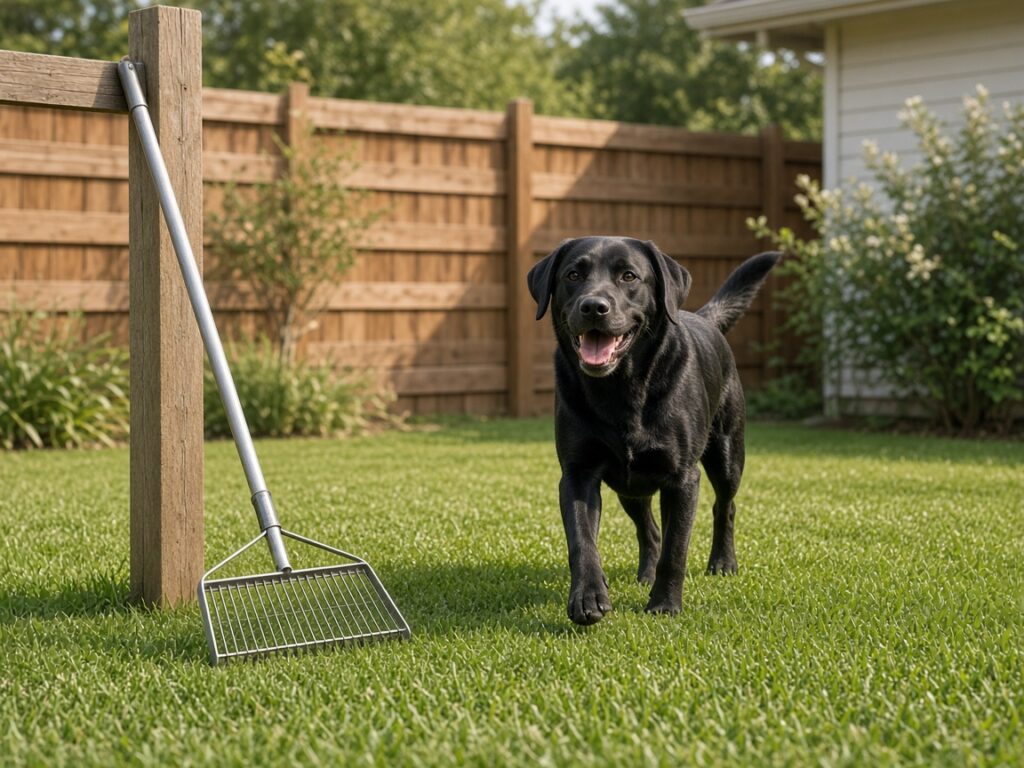
- Keep supplies by the back door. A scooper, bags, and gloves in one spot make a two-minute job actually take two minutes.
- Walk a pattern. Go back and forth across the yard in lines so you don’t miss spots behind shrubs, along fence lines, or under the trampoline.
- Bag it and bin it. The CDC recommends bagging pet waste and putting it in the trash. In Houston, the city code asks that pet feces go into containers wrapped separately and securely. Keep the trash-cart lid closed.
- Wash your hands afterward, even if you wore gloves.
One-Time Cleanup or Recurring Service?
If the yard has gotten away from you, a one-time cleanup resets it to zero. Recurring service keeps it there. Heather’s Poop Scoop Service offers twice-weekly, weekly, and every-other-week visits, plus one-time cleanups. Pricing is per 1/8 acre, recurring service has no contract, and there’s no extra fee for additional dogs. See one-time cleanup vs. recurring service for help choosing, or go straight to our poop scoop pricing.
The Bottom Line
There’s no single right number, but “promptly” beats “eventually” every time. Consider how many dogs you have, how the yard gets used, and the weather, then choose the most frequent schedule you can realistically keep.
Ready to Stop Scooping?
If “promptly” isn’t realistic for your week, we can take the scooping off your list. Recurring and one-time service are available across our Northwest Houston service area.